Amarte Daily Wonder Cleansing Foam Review

Amarte is a Korean skincare company that formed an international partnership to customize their formulations for the western markets.

I was looking for a new cleanser that would help with congestion and breakouts on the skin as well as remove makeup and oil. The Wonder Cleansing Foam fit with what I was looking for with claims to deep cleanse all skin types while providing moisture to the skin.

Directions state to use a pea-sized amount morning and night, apply to palm and add water to work into a rich lather; massage face with fingertips and rinse. This can be used as a first step to double cleansing, with the Daily Exfolipowder as a second step (which I also purchased).
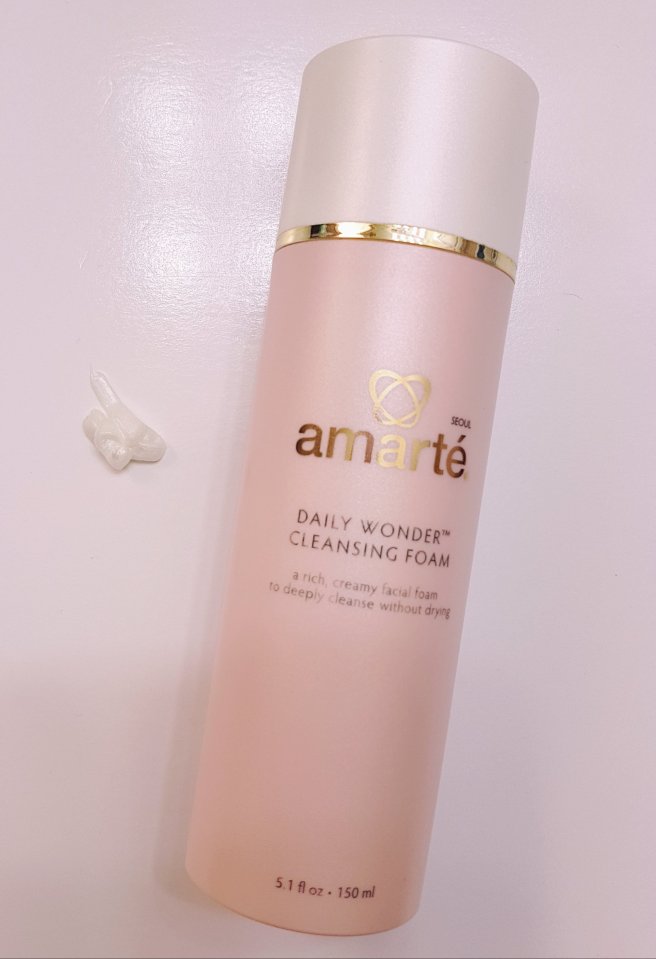
Ingredients: Water, Polysorbate 20, Allantoin, Potassium Hydroxide, Stearic Acid, Beeswax, Tocopheryl Acetate, Lavandula Angustifolia (Lavender) Extract, Chamomilla Recutita (Chamomile) Extract, Elemental Sulfur, Rosmarinus Officinalis (Rosemary) Leaf Extract, Cucumis Sativus (Cucumber) Fruit Extract, Cucumis Sativus (Cucumber) Juice, Sodium Hyaluronate, Natural Betaine, Iris Florentina Root Extract, Camellia Oleifera (Green Tea) Seed Extract, Luffa Cylindrica Extract, Cocamidopropyl Betaine, Myristic Acid, Glycerin Lauric Acid, Glyceryl Stearate/PEG-100 Stearate, PEG-75, Disodium EDTA, Phenoxyethanol.

Allantoin is an anti-irritant said to soothe and calm skin. Elemental sulfur is effective in use against acne and rosacea as an antimicrobial and anti-inflammatory. Sodium hyaluronate and glycerin are included as humectants. While these two ingredients are beneficial for the skin, as the cleanser remains on skin for a minute at most and then is rinsed off, I don’t imagine the skin gets much benefit. Luffa cylindrica is said to have anti-inflammatory, antifungal and antioxidant properties.

I’ve been using the Wonder Cleansing Foam for a few months now, most mornings and and at night. The value is good – only a pea-sized amount is needed to cleanse the whole face and neck, and it foams up quite a bit, so the bottle lasts a long time. It comes in a bottle with a pump and has a light, cucumber fragrance that is not overpowering or chemical-smelling.

On first use of this cleanser I was struck by how much friction and pulling there is between the fingers and the skin on rinsing. If enough water is not used while cleansing, there is a lot of friction as well. I used this with my Foreo Luna and had to make sure there was more water on the skin while cleansing; if not, I would get tugging on the skin. Because of this over-squeaky-clean skin, my face seemed a bit tight on rinsing, although didn’t really feel dry and I didn’t get flaking of the skin like I did when I used Akita’s Rosewater Face Wash. I wouldn’t say this is a moisturizing face wash though. It seems to rinse well, so I don’t think the friction is due to residual cleanser left on the skin. I tried this on my chest, arm and hands as well and still had the same friction feeling. I followed this cleanser with a mask or with the Exfolipowder a couple times a week and didn’t feel the friction after rinsing these products.

This removed a full face of light coverage foundation and non-waterproof mascara. It left a bit of eyeliner, however. A double cleanse was required to remove silicone-based sunscreen (I have been using sun care from The Ordinary and NIOD). This cleanser seems too “strong” for use in the morning and I sometimes used a gentler cleanser; Drunk Elephant’s Beste No. 9 Jelly Cleanser or NIOD’s Sanskrit Saponins.

While using the Wonder Cleansing Foam, I still got my usual breakouts,
especially in warmer weather as my skin got oilier, and my blackheads didn’t seem to diminish much, if at all, but it cleansed the skin well, and the pores around my nose seemed cleaner. I wouldn’t say this had long term calming effects for my skin; there are better leave-on products for that.

I didn’t test the pH of the Wonder Cleansing Foam myself, but while I was looking for the pH, a blog post from glamorable.com says when mixed with water, the pH is high at 9.

While this works as a cleanser for makeup removal and has a nice, foamy texture while cleansing, I cannot get past the squeaky friction feeling on rinsing (overly squeaky-clean skin usually means drying), and will not be repurchasing.

For my next cleanser, I’ve ordered The Ordinary’s newly released Squalane Cleanser.

Thank you for reading.
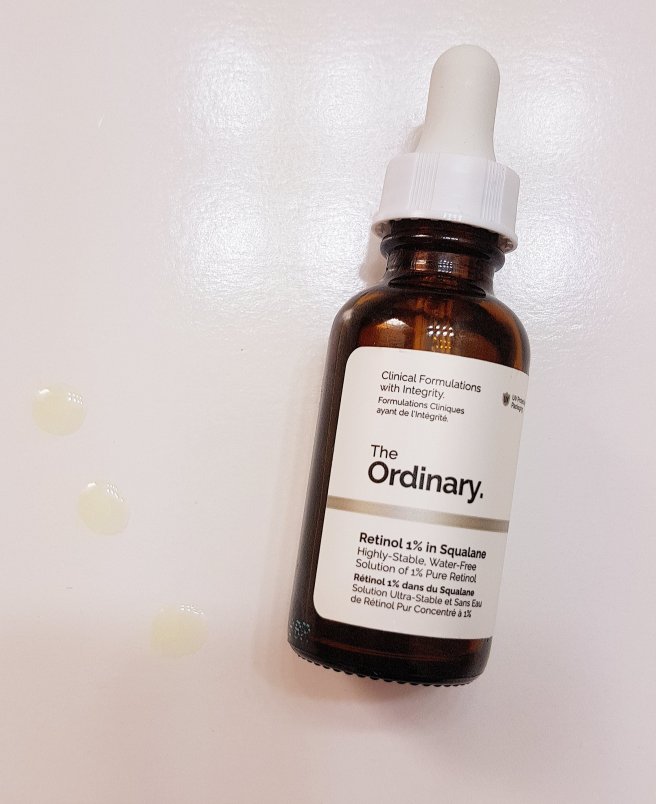
The Ordinary 1% Retinol in Squalane Review

Having used Retin-A twice before (the last time being over a year ago), I wanted to try the more gentle retinol and decided on The Ordinary’s 1% Retinol in Squalane. On The Ordinary website, this is labelled as high strength with very high irritation. This product claims to reduce the appearance of fine lines, photo damage (damage caused by UV exposure – hyperpigmentation, fine lines, texture issues) and general skin aging.

Ingredients: Squalane, Caprylic/Capric Triglyceride, Retinol, Solanum Lycopersicum (Tomato) Fruit Extract, Simmondsia Chinensis (Jojoba) Seed Oil, BHT. 

Directions state to apply a small amount over the face in the evening. Use sun protection.

The first ingredient is squalane. This is naturally found in the skin and decreases as we age. Squalane provides non-greasy hydration. Tomato extract and BHT (butylated hydroxytoluene) are used as antioxidants. This also contains jojoba oil.

I was a little reluctant to purchase this at first, as it contains squalane and I have generally oily skin, but I used this over the winter for 4 months, as my skin gets dehydrated and combination in colder weather.

I have fine lines on my forehead and around my eyes (I didn’t use the retinol around the eyes), hyperpigmentation from sun damage, large pores, blackheads, breakouts, scarring and texture.

I started right in using this every evening, applying 3 or 4 drops. The product took a couple minutes to absorb (though didn’t seem to absorb fully), but didn’t feel heavy or oily. After the first week I had a tight, tingling feeling on the skin, but no more redness than usual. My nose got a bit dry and had a bit of peeling. My skin felt sensitive in the harsh wind and cold and to almost every other product in my routine. To mitigate some of the irritation and sensitivity, I used Balance from Your Best Face Skincare. After one week of use my skin looked brighter and felt smoother and moisturized. The irritation diminished after about 2 weeks.

After one month of use, I had some flaking around my mouth and between my eyebrows. It was also around this time that I felt texture and bumps on my lower cheeks toward my jawline that had been smooth prior. I stopped use for 2 days, and on reapplication after this time, my skin smoothed out again and the bumps disappeared. About 5 days later, they returned. I tried an application of mandelic acid, also from The Ordinary, which took the bumps away. This seemed to be the typical cycle over the remainder of use. I had a thought that perhaps this is due to the squalane preventing exfoliation as cell turnover increases with the retinol (especially as the mandelic acid improved the texture) – oily skin needs exfoliation as dead skin builds up, though squalane is not really an oil- so I’m not certain. There was not really any further peeling that I noticed in the mirror after about 1-1/2 months.

Over the last week the weather has warmed up and my skin has gotten oilier especially on my forehead and I’ve gotten a couple breakouts.

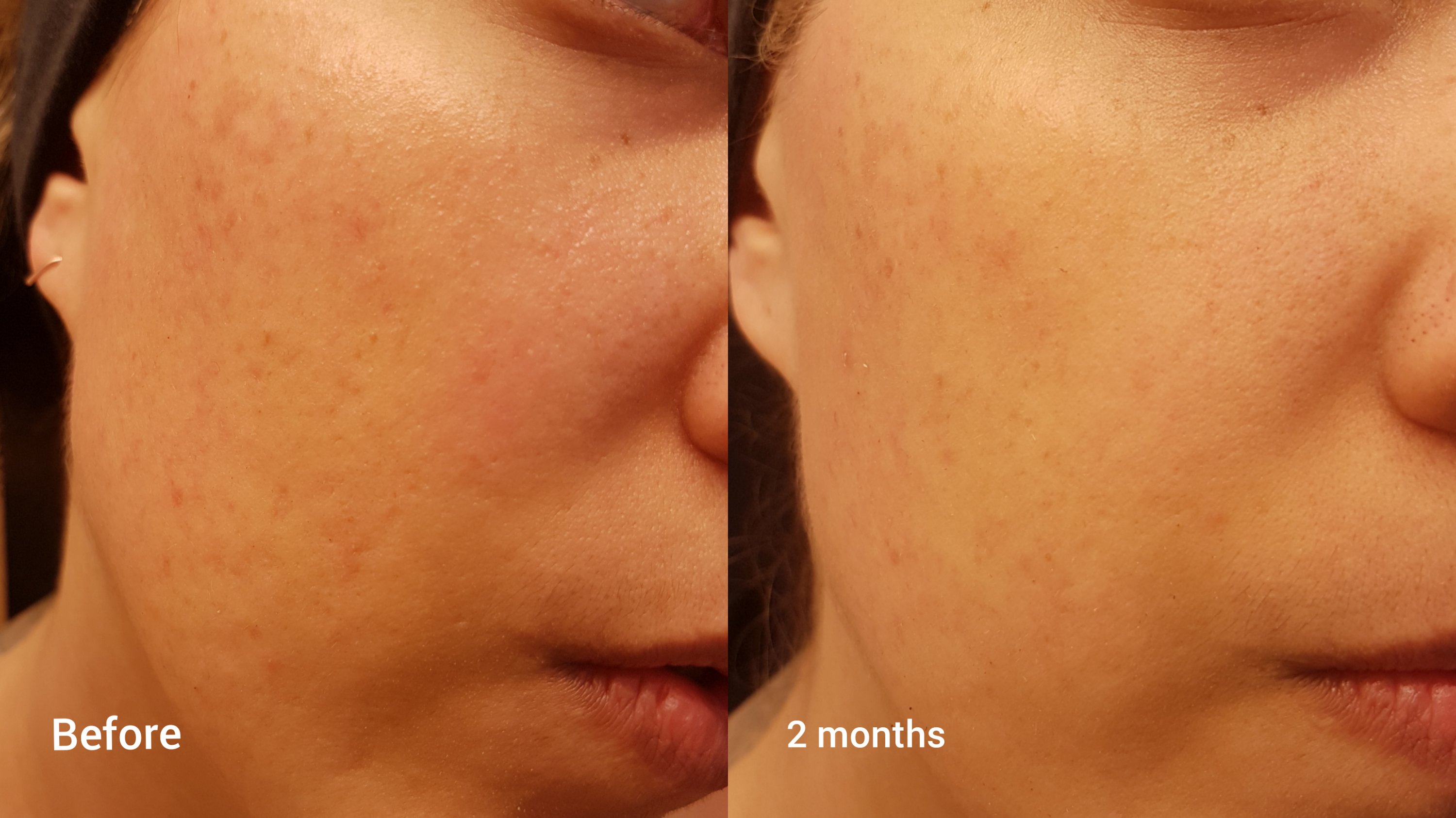
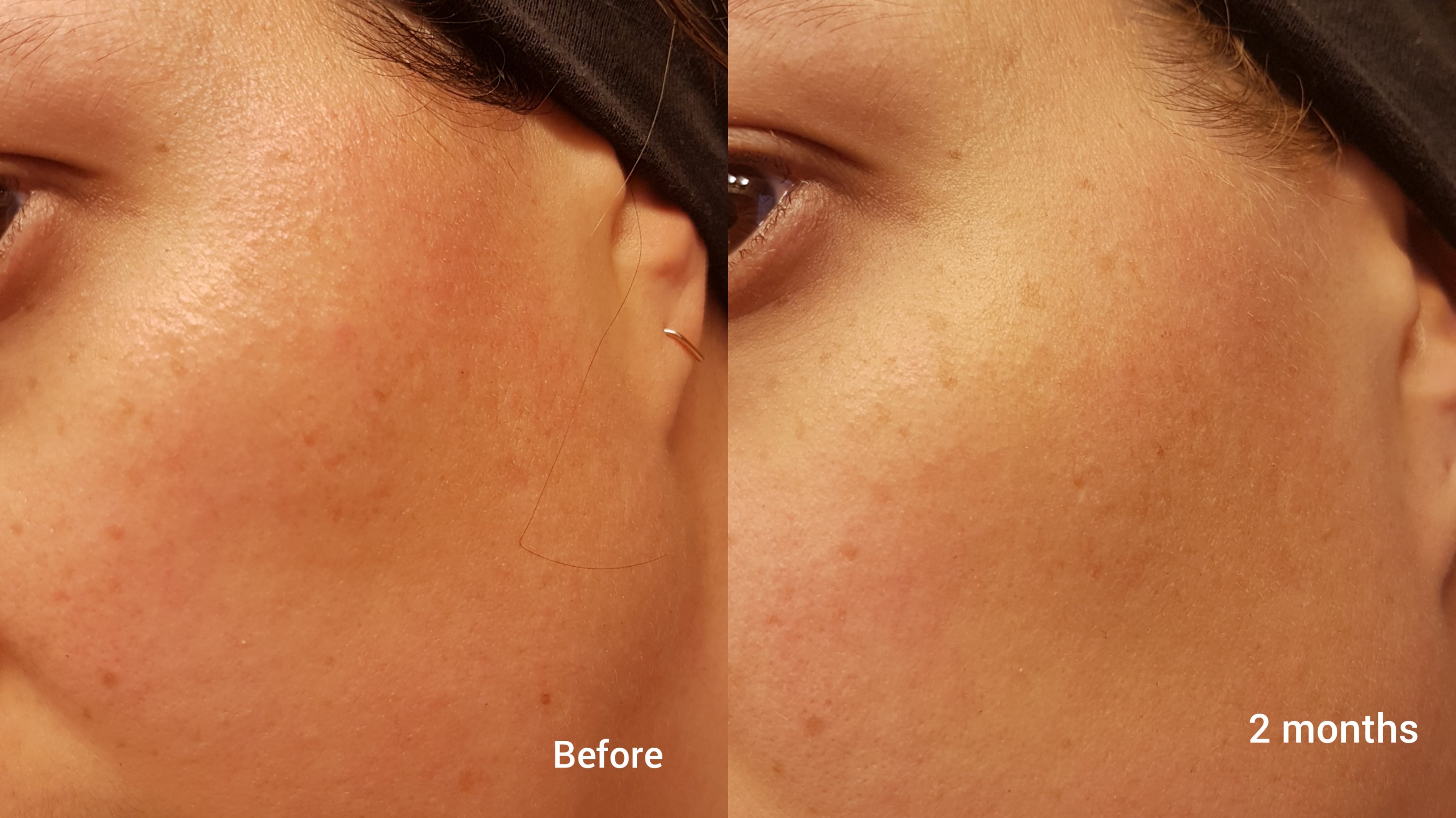
The retinol diminished the fine lines on my forehead, though it looks a bit more congested (perhaps due to my own increased oil on the skin). My nose looks a bit smoother with some diminishing of some surface blackheads. The pores look a bit more noticeable, perhaps due to being cleaner. My skin looks less blotchy and textured and looks smoother.

I do not see any improvement in the freckles and hyperpigmentation, but I do not really expect to after only 4 months.

I quite like the squalane for hydration and moisturization of the skin without feeling heavy and oily; I’m not sure about use in hot summer weather, however, I might look to purchase a couple products from Biossance that uses a base of squalane in their product line.

I generally like this product and would consider repurchase. I am now moving onto Retin-A again soon before the summer months.

Thank you for reading.

NIOD Re:Pigment Review

Re:Pigment (RP) is a skin brightening serum from Deciem’s NIOD that targets hyperpigmentation, uneven pigmentation and overall pigmentation issues.  This product claims to visibly counteract uneven pigmentation, such as spots, and to brighten the skin.

niod rp

Ingredients: Lentinus edodes mycelium extract, Aqua (Water), Glycerin, Propanediol, Potassium Azeloyl Diglycinate, Butylene Glycol, Acetyl glycyl beta-alanine, Myristoyl Nonapeptide-3, Tetrapeptide-30, Oligopeptide-68, Diglucosyl Gallic Acid, Evodia Rutaecarpa Fruit Extract, Algae Extract, Glycine Soja (Soybean) Oil, Hydrogenated Lecithin, Sodium Oleate, Disodium EDTA, Trisodium Ethylenediamine Disuccinate, Pentylene Glycol, Dimethyl Isosorbide, Ethoxydiglycol, Polysorbate 20, Potassium Sorbate, Sodium Benzoate, 1,2-Hexanediol, Phenoxyethanol, Caprylyl glycol.

RP uses a number of active brightening technologies:  Diglucosyl gallic acid NIOD says is  sixty times more potent than kojic acid in visibly brightening skin tone, acetyl glycyl beta alanine is a  brightening peptide solution that claims to visibly enhance the skin’s radiance, a high concentration of white shiitake ferment claims to target the appearance of dark spots within less than a week of use, potassium azeloyl diglycinate (azeloyl glycine) is used for brightening and anti-redness, encapsulated oligopeptide-68 claims to reduce the appearance of pigmentation from sun damage, solubilized tetrapeptide-30 claims to even the skin’s complexion and red evodia fruit derivative claims to encourage skin radiance and evenness.

To target previous hyperpigmentation from sun damage and breakouts, I have also had IPL treatments (photofacial) and have used the Obagi Nu-Derm system, both with great success. I wanted to try a serum that was less expensive than those above and did not contain kojic acid or hydroquinone.

Directions state to shake lightly and apply in the morning and evening. Use sun protection.

I have hyperpigmentation (freckles) from the sun mostly on my cheek bones, redness to my skin and am prone to postinflammatory hyperpigmentation (these are darkened spots on the skin left behind after a pimple has healed). Hyperpigmentation takes a long time to treat, and I didn’t expect this product to work in just a few months (despite the claim that white shiitake ferment targets spots in less than a week), so took a full year to review.

I applied morning and night, one to two drops on each of my cheeks (the apples of the cheeks to the under eye socket and to the jaw line) as this is where I get hyperpigmentation from the sun and breakouts. There is not really a smell to the product. I don’t find it be oily on the skin, but it doesn’t seem to penetrate fully and on touching my skin, I can feel the product hours after application.

incollage_20181007_1600376353533955426101856433.jpg

Above, on the right side of my face, I got a breakout at 3 months, which turned into a postinflammatory hyperpigmented spot. These spots take months to fade on their own. I can still see it faintly at 12 months, but I’m not sure it faded faster with the RP than it would have on its own. My complexion is more even and some freckling has a bit of fading by 12 months. I think for redness, NIOD’s Modulating Glucosides or SDSM is better (perhaps not for long term, however). Some of the scarring towards my chin and jawline looks better, I think due to more evenness of the skin. For evenness and exfoliation, I feel that vitamin C or an AHA or retinol serum does a better job for less cost and with faster results than RP.

incollage_20181007_1615481848681705527283842722.jpg

On the left side of my face, the freckling looks a bit faded and there is more evenness to the skin.

I expected more from this product after 12 months of twice-daily use.  While RP claims to fight redness, even the complexion, fade spots and make the skin brighter and more radiant, there was only a slight fading of the hyperpigmentation and more evenness to the skin. As mentioned, vitamin C, AHA and retinols promote exfoliation, radiance and brightness as well as a more even complexion, while other anti-redness serums work better as well.

I will not repurchase this product.

Thank you for reading.

NIOD Modulating Glucosides Review

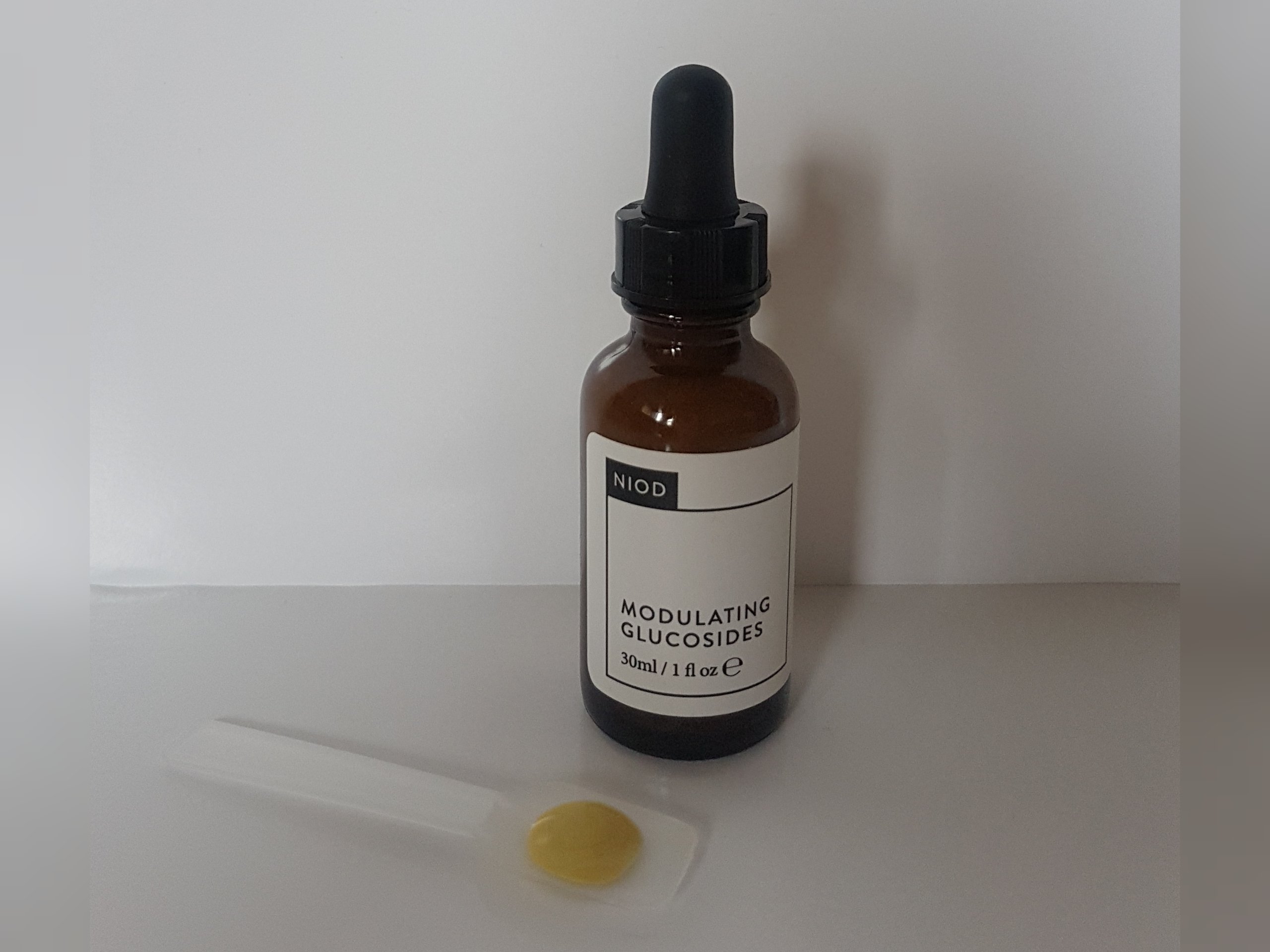
Modulating Glucosides (MG) from Deciem’s NIOD is a relatively new product that is silicone and oil free and targets signs of skin sensitivity, discomfort and irritation by reducing the look of redness and reduces itchiness and stinging, particularly caused by procedures, acids and retinols.

incollage_20180819_1743221895724250225051376228.jpg

Ingredients: Aqua (Water), Squalane, Isodecyl Neopentanoate, Glycerin, Caprylic/Capric Triglyceride, Pentylene Glycol, Propanediol, Hexyldecanol, Bisabolol, Butylene Glycol, Epigallocatechin Gallatyl Glucoside, Rosmarinyl Glucoside, Caffeyl Glucoside, Gallyl Glucoside, Tetrasodium Tetracarboxymethyl Naringeninchalcone, Hydroxymethoxyphenyl Decanone, 4-t-Butylcyclohexanol, Cetylhydroxyproline Palmitamide, Hydroxyphenyl Propamidobenzoic Acid, Palmitoyl tripeptide-8, Superoxide Dismutase, Sodium PCA, PCA, Arginine, Glycine, Alanine, Serine, Valine, Isoleucine, Proline, Threonine, Histidine, Phenylalanine, Aspartic Acid, Sodium Lactate, Mirabilis Jalapa Callus Extract, Tasmannia Lanceolata Fruit/Leaf Extract, Zingiber Officinale (Ginger) Root Extract, Curculigo Orchioides Root Extract, Isochrysis Galbana Extract, Brassica Campestris (Rapeseed) Sterols, Stearic Acid, Dextran, Isoceteth-20, Polyacrylate Crosspolymer-6, Xanthan gum, Tocopherol, Propyl Gallate, Tromethamine, Dehydroacetic Acid, 1,2-Hexanediol, Benzyl Alcohol, Phenoxyethanol, Caprylyl Glycol.

This product contains a number of actives – bioactive glucosides to soothe skin and counteract uneven skin tone caused by sensitivity or irritation; a lipid complex to reduce stinging, itching and redness; a lipopeptide to reduce chemical-induced irritation; naringenin chalcone to comfort stressed skin; superoxide dismutase, a potent antioxidant; a pH balancing agent; tasmanian pepperberry to calm stressed skin; a molecule for barrier support that offers hydration.

Directions state to apply a few drops to the face morning and night. If using in a NIOD regimen, apply after CAIS, but before MMHC.

I bought this product before the Deciem website listed anything in the information section (this information really should have been on the website at launch), but read in an Instagram post that MG was for redness on the skin. I have oily, breakout prone skin that is not sensitive, but I have redness of my cheeks almost all the time except for some mornings (not from rosacea or other skin condition). I bought this product in hopes that it would soothe this redness. At the time I used MG I was not using any acids or retinols nor had any procedures, so cannot speak to the efficacy of MG in those scenarios.

This product is like a thin lotion, yellow in color and comes in a brown dropper bottle. It has a bit of a medicinal smell that dissipates quickly. While it does soak into the skin, I find that it leaves a bit of a protective barrier on the skin pretty much all day, so that I can still feel the product with my fingers hours after application (I don’t use too much; 3 to 4 drops for the whole face). I’m surprised it is to be applied after MMHC, as MG is thicker and seems to stay in a layer on the skin (though the MMHC still seems to get absorbed).

incollage_20180819_1635259921571285227906336912.jpg

incollage_20180819_1637345051588121534465293647.jpg

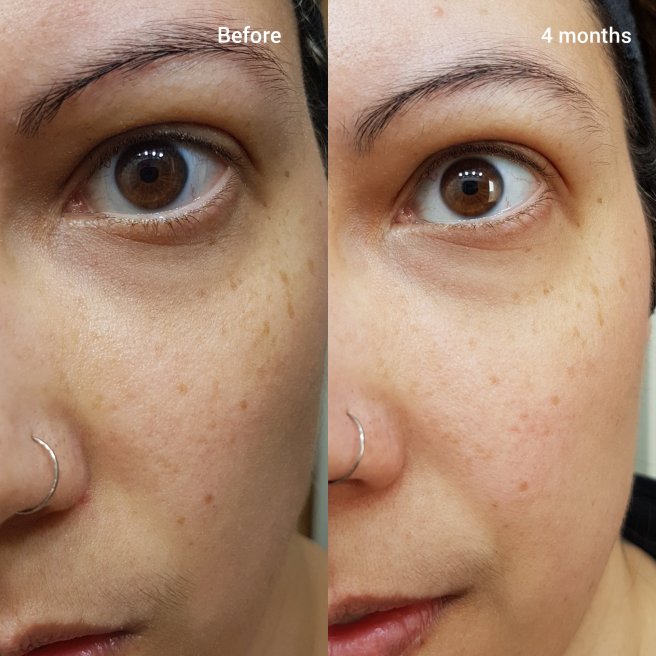
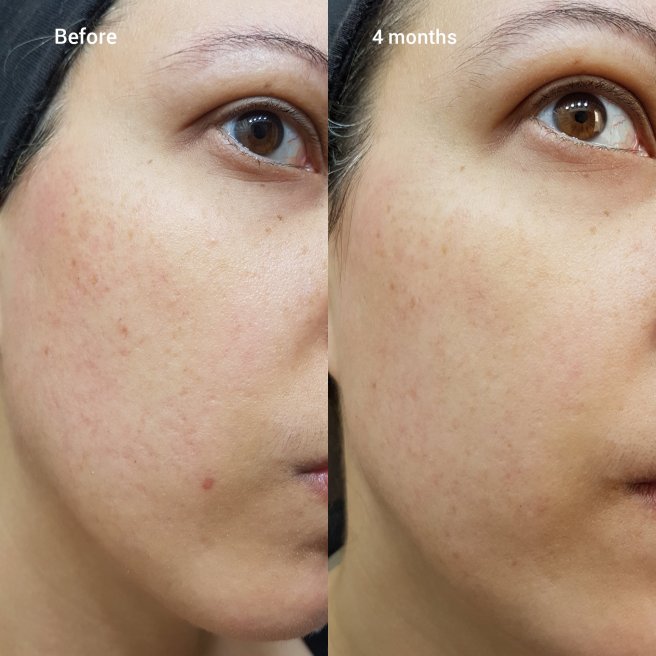
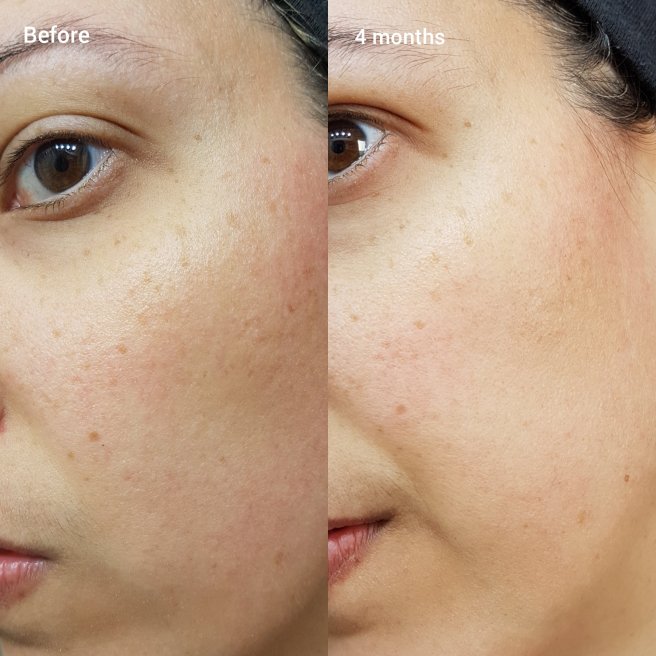
I used NIOD Modulating Glucosides for 2 months, morning and night. On looking at the photos, it looks like I had about a 50% reduction in redness and some of the texture and irritation was reduced on the right side of my face. I don’t find MG to be hydrating on its own. I am surprised that this product comes in a dropper bottle, as this is messy to use. You can buy a NIOD pump separately, but why doesn’t it come with a pump bottle on purchasing? The same was true for the NIOD sun care, but I see it comes in a pump now. While there was reduction in redness (which I was hoping for) and reduction in the texture and irritation that is often present on the right side of my face, the Modulating Glucosides didn’t completely resolve the redness on further use and the redness, in fact, came back. I got similar, if not better results on using NIOD SDSM (albeit the redness came back after 4 months’ use as well). I don’t see sufficient or continuing results on further use of the Modulating Glucosides to consider a repurchase.

Update: I have since used MG while using Retin A. I didn’t have much left, but was able to use it for about a week. On application, as with most skincare used while on Retin A, I got stinging to the skin (surprising since it’s supposed to be soothing), but perhaps not as much redness. I applied to the newly tweezed skin around my eyebrows; I get redness, pain and bumps on the skin after tweezing or waxing. MG took away some redness but not much in the way of irritation relief. I prefer Balance to the Modulating Glucosides.

Now that I have blonde hair (I was a dark brunette; you can read about the process here), the redness in my cheeks is more noticeable. I just purchased Your Best Face Skincare’s reformulated Balance that similarly claims to calm skin and reduce redness and breakouts while balancing oils . The previous Balance formula was promoted as an oil absorbing mattifying treatment (which my skin loved). Keep an eye on this space to see the new Balance review in the coming months.

Thank you for reading.

Cocoon Apothecary Eyewaken Eye Cream Review

Cocoon Apothecary is a Canadian company that creates plant-based skin care from ethically sourced ingredients in small batches. I purchased the Eyewaken Eye Cream, looking for something to help with my dark circles and puffy under-eyes.

Eyewaken

Ingredients: Cornflower hydrosol*, rose hydrosol*, argan oil*, grapeseed oil*, sweet almond oil*, cetearyl alcohol (wax from coconut), stearic acid, cocoa butter*, vegetable glycerin, sodium cetearyl sulfate (from coconut), tocopherol, sodium anisate (derived from fennel), sodium levulinate (derived from corn), glyceryl caprylate. *certified organic

Cornflower hydrosol is said to reduce eye puffiness and fine wrinkles. Rose hydrosol can calm irritation and hydrate. These hydrosols are said to give a cooling astringent effect. This product contains a few oils and moisturizing ingredients. Sodium anisate can soothe irritated skin and is used as a natural preservative. Sodium levulinate can be used as a preservative and conditioning agent. Glyceryl capraylate is used as an emulsifier and emollient.

This product claims to soothe tired eyes, combat fine lines and wrinkles, firm the skin and reduce puffiness and dark circles.

I used this morning and night, dabbing on the lower eyelid up to the brow bone for 4 months. It is light weight and absorbs fast leaving a silky feeling on the skin. It has a light herbal scent with a hint of rose.

incollage_20180731_1406599688485427491817600729.jpg

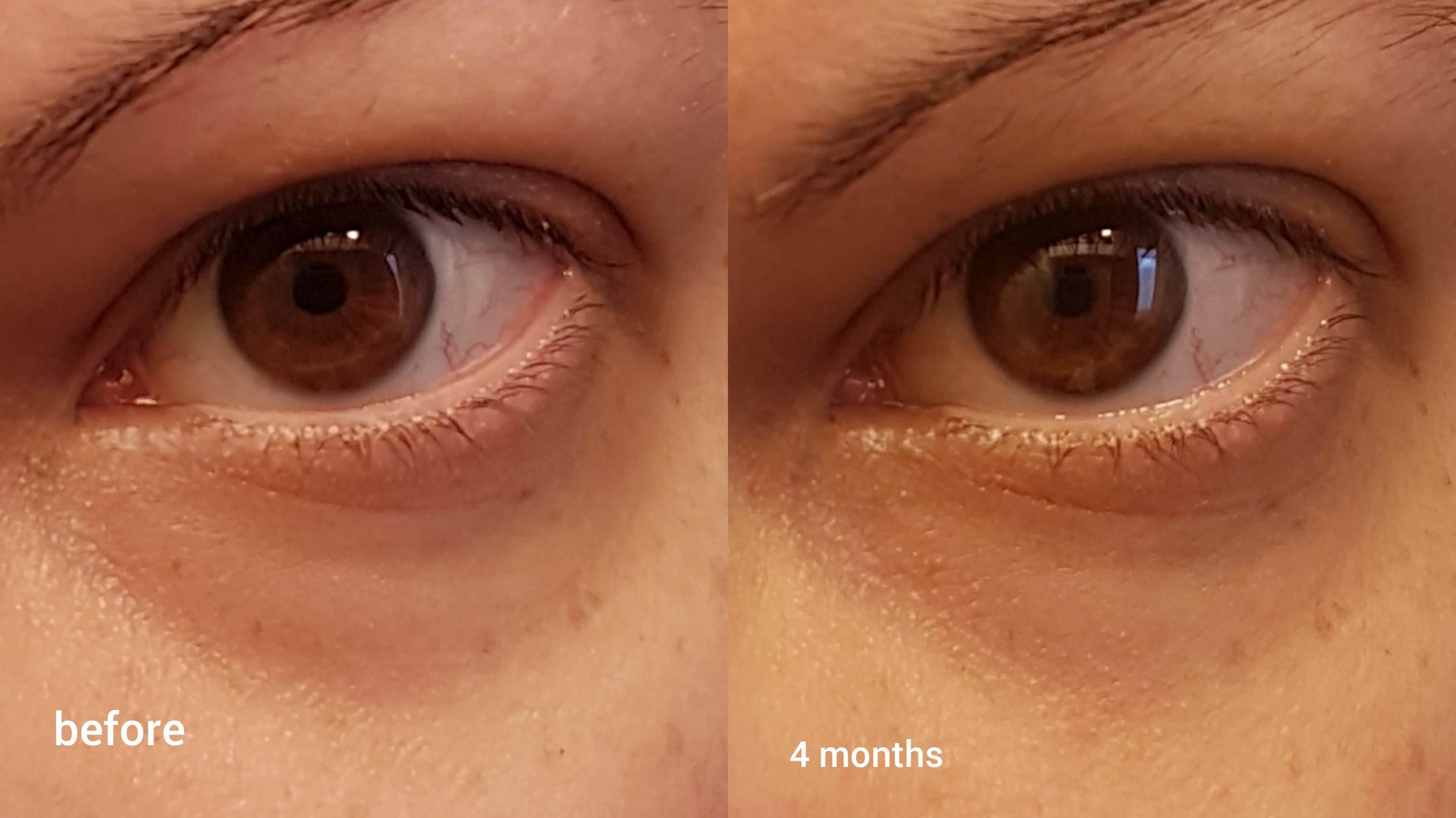
While I like the ingredients and this feels silky on the skin, I feel like it does a better job moisturizing and protecting than anything else, so might be a better preventative rather than for someone with already quite puffy, dark eye circles. In looking at the photos, I see some reduced puffiness (my eyes look the same to me in the mirror though), but no reduced color or fine lines. In fact, the 4-month photo seems to have more fine lines towards the outer eye (because of the reduced puffiness, or some other variable?) On application, I’m not sure I felt a cooling effect.

I will not be repurchasing this, but may take another look at Your Best Face Skincare’s Correct eye cream.