Biossance Squalane + Tea Tree Cleansing Gel Review

Biossance’s Squalane + Tea Tree Cleansing Gel claims to remove makeup, purify pores, balance skin and reduce excess surface oil while leaving skin visibly clearer and softer.
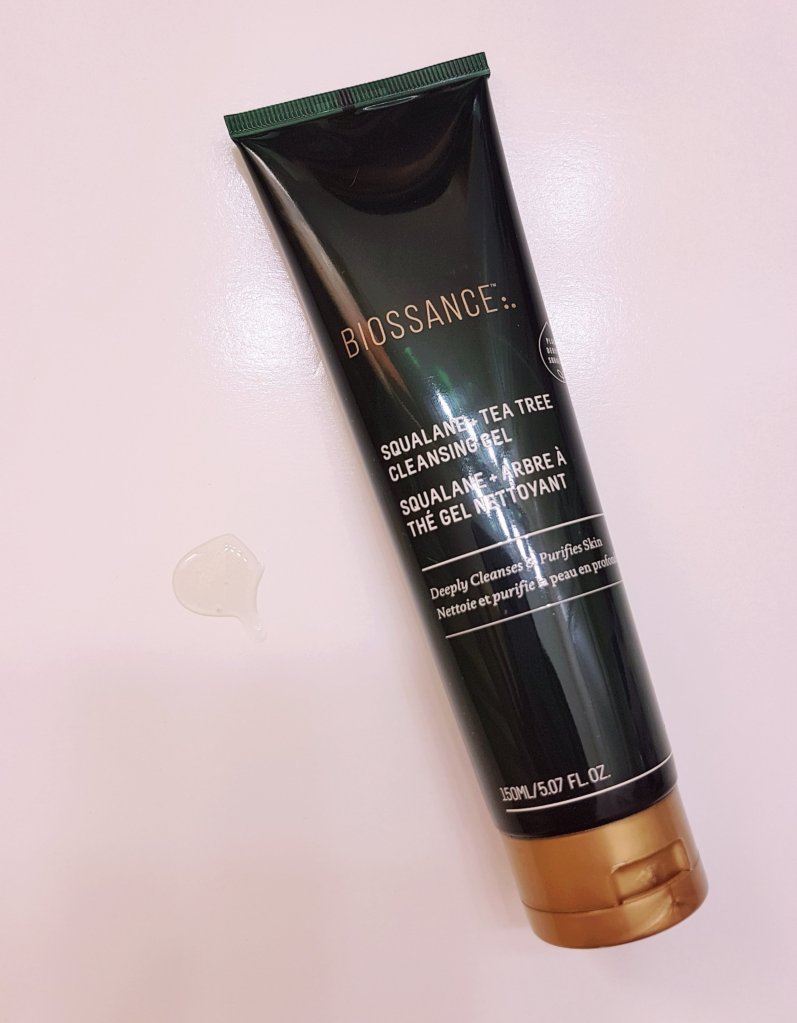
Ingredients: Water, Cocamidopropyl Hydroxysultaine, Aloe Barbadensis Leaf Juice, Glycerin, Sodium Cocoyl Isethionate, Disodium Coco-glucoside Citrate, Squalane, Cocoyl Proline, Melaleuca Alternafolia (Tea Tree) Leaf Oil, Sodium Levulinate, Hydrolyzed Pea Protein, Lavandula Angustifolia (Lavender) Oil, Medicago Sativa (Alfalfa) Leaf Extract, Magnesium Chloride, Potassium Sorbate, Sodium Gluconate, Caramel, Citric Acid, Linalool

To go over some ingredients – Cocamidopropyl hydroxysultaine and sodium cocoyl isethionate are mild surfactants derived from coconut oil. Disodium coco-glucoside citrate is a mild surfactant. Cocoyl proline is a mix of coconut fatty acids and the amino acid proline used as a hydrator and conditioning agent. Sodium levulinate is used as a preservative and skin conditioning agent. Alfalfa leaf extract is said to soothe skin and help make skin look brighter.

Directions state to dampen skin, massage a dime size amount into a light lather and rinse.

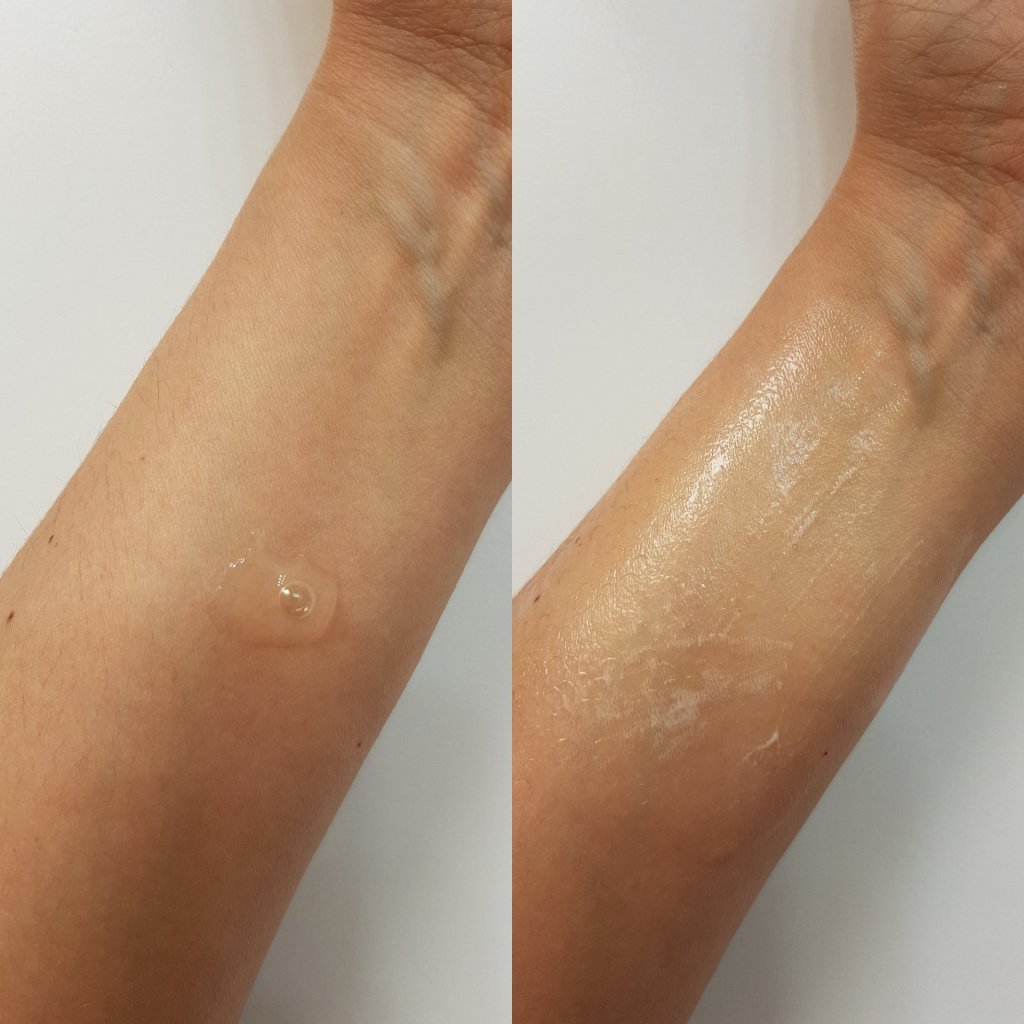
This is a gel cleanser that forms a light lather. On rinsing, the cleanser itself doesn’t leave the skin feeling oily, but does leave it feeling a bit dry (though not as drying as Drunk Elephant’s Beste No. 9 Jelly Cleanser), which is surprising given the addition of squalane oil. It took a bit more effort and more water to rinse than other cleansers (I found this to be the case as well with the Drunk Elephant Jelly Cleanser; perhaps that’s the nature of gel cleansers?). The Squalane + Tea Tree Gel Cleanser smells nice; a herbal scent, which I’m guessing is the tea tree oil (I don’t think I’d used anything with tea tree oil previously).

I have oily skin that is prone to breakouts, blackheads around the nose, congestion and redness. One of the reasons I chose this cleanser – for probably about 5 or 6 years I had gotten pimples on the right side of my face in one area on my lower cheek above the jawline; no idea why and I couldn’t get rid of them. One would break out, start to heal and a couple days later, the next would break out, until I had about six in various healing stages. About a year ago they disappeared; no idea why. Three months ago, the breakouts started again, in the same manner as before. I thought I’d give this cleanser a try, as tea tree oil is said to have antimicrobial, anti-inflammatory properties that can target acne.

The Squalane + Tea Tree Cleansing Gel is able to cleanse light coverage foundation, but for heavier full coverage foundation, heavier eye makeup and mineral sunscreen, needs two uses.
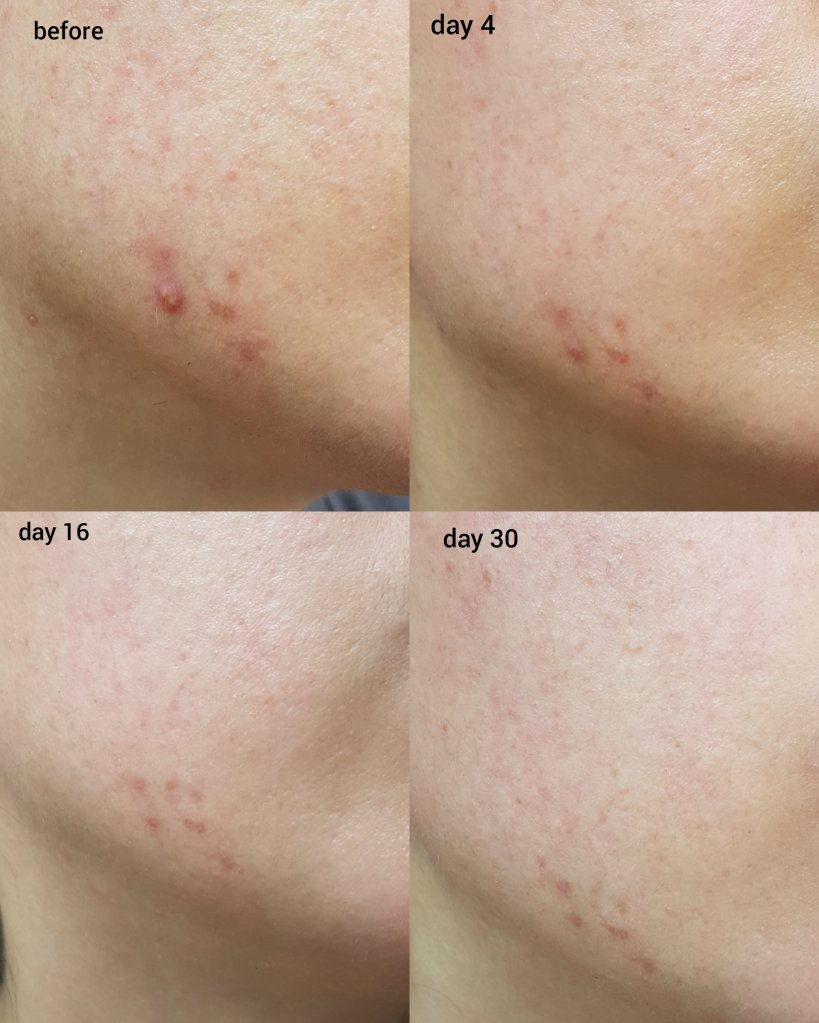
Having changed nothing else in my skincare routine (other than an eye cream; I’ve been using the Biossance Squalane + Peptide Eye Gel), I’ve used the Biossance gel cleanser for a month. As above, throughout the month, the breakouts have healed nicely and I haven’t gotten any new ones. My skin looks generally less congested with a bit less redness. My skin is perhaps a bit less oily overall (though salicylic acid works better to balance oil). I noticed at day 16 I had less blackheads on my nose, but by day 30, there were more. My skin doesn’t feel any softer.

I’m happy with the results of this cleanser, but I have to wonder if the cleanser itself provided the results or if, by some coincidence or other variable, the breakouts have stopped. Being a rinse-off product, I’m generally skeptical of a cleanser providing results beyond cleansing makeup and sunscreen from the skin.

I’ll continue to use the Biossance Squalane + Tea Tree Gel Cleanser (and would repurchase) and will update here if the breakouts start again with continued use or on switching to a new cleanser.

Thank you for reading.
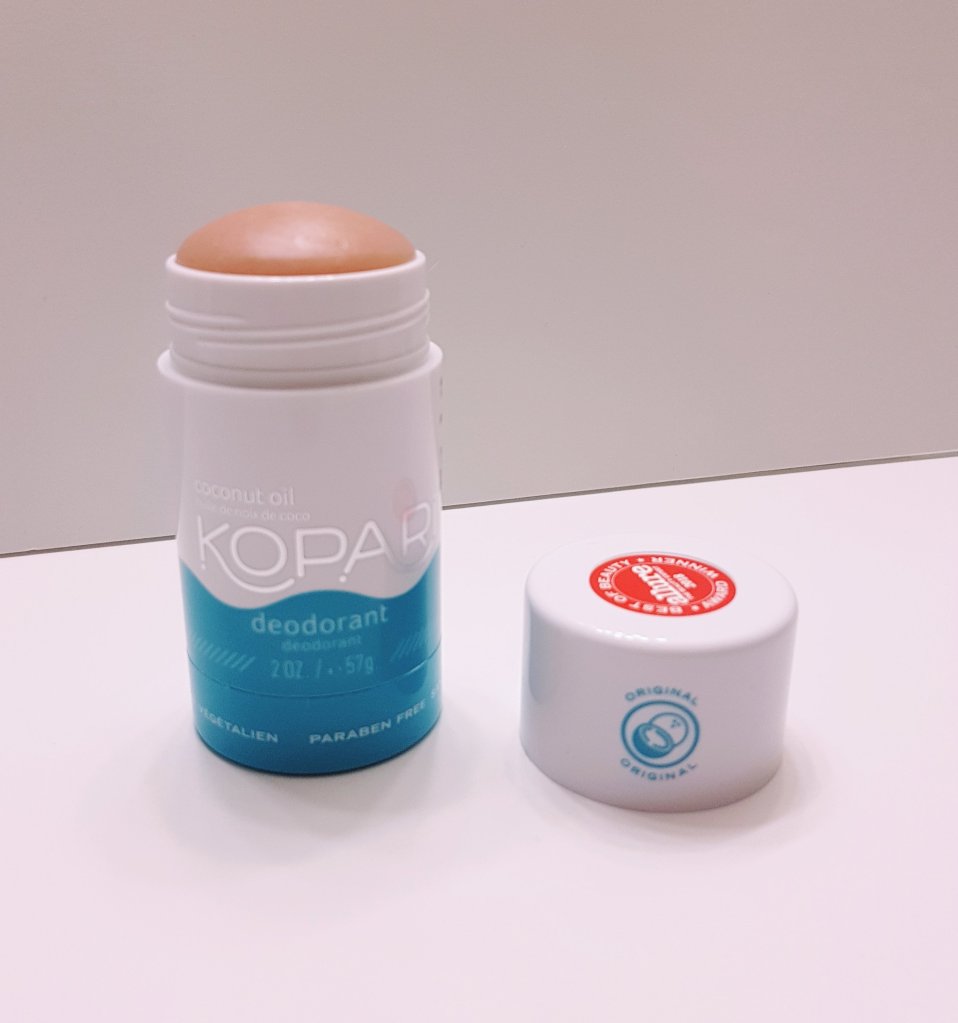
Kopari Deodorant Review

Kopari deodorant is vegan, and baking soda-, silicone-, aluminum- and paraben-free that claims to use an invisible, non-sticky formula that reduces odor (even on long days) and soothes and hydrates the underarms.

Ingredients: Propylene Glycol, Propanediol, Water, Sodium Stearate, Fragrance (Parfum), Saccharomyces Ferment, Caprylyl/Capryl Glucoside, Sodium Caproyl/Lauroyl Lactylate, Ethylhexylglycerin, Polyglyceryl-5 Oleate, Triethyl Citrate, Sodium Cocoyl Glutamate, Silica, Glyceryl Caprylate, Cocos Nucifera (Coconut) Water, Salvia Officinalis (Sage) Oil, Glycerin, Cocos Nucifera (Coconut) Fruit Juice, Sodium Anisate, Glyceryl Laurate, Cocos Nucifera (Coconut) Oil, Citric Acid

Fragrance is the fifth ingredient; pretty high on the list. Saccharomyces ferment is high in amino acids and minerals and can hydrate and soothe the skin. This has coconut oil (hydrating and is naturally antimicrobial and antibacterial), coconut water and coconut fruit juice near the end of the ingredient list.

I have been using Routine Cream natural deodorant for a couple years now and since running out a month ago, decided to try the Kopari deodorant in the original coconut scent.

Directions state to glide on the underarms.

I’ve been using generally artificial fragrance-free skincare and deodorant lately and when I first smelled the deodorant from Kopari I did not like it; kind of like a strong, fake flowery, bubblegum scent with maybe a hint of coconut. If coconut was not on the label, I would not know it was supposed to smell like coconut milk. Under the arms, on application, the scent changes a bit and it smells less flowery as it mixes with the body chemistry I guess. Before using the deodorant myself, I read a number of reviews that mentioned an almost “swamp smell” under the arms when using this product. I did not find that to be the case for me. It took me a couple days to get used to the scent and now I actually quite like it. If you are sensitive to fragrance, this may be too strong.

I use three swipes of the deodorant. It goes on clear and glides on very smoothly. It takes a minute to dry. If too much is used, it will feel sticky and wet. As this is a deodorant and not an antiperspirant, there will be moisture from sweat. It does not leave marks or stains on clothes. The scent (with fade over the day) lasts from when I apply in the morning to when I go to bed at night (about 18 hours) in an unconditioned office setting without reapplication. I applied before going to the gym and the scent of the deodorant was still there on finishing my workout. The deodorant worked well on hiking outside in 25°C weather. My underarms had no odor nor did it smell like there was body odor just covered up. I often get hot and sweaty while sleeping at night, so apply this before going to bed and can still smell the deodorant in the morning (this is the only deodorant that has worked for me during the night thus far).

Last night I applied the Kopari deodorant before going to sleep and did not reapply in the morning. I did some errands and got hot and sweaty while cleaning the house. I had no odor and there was just a hint of the deodorant scent. I’m pretty impressed. I haven’t had that level of protection with other natural deodorants or traditional antiperspirants and I’m generally rather stinky without deodorant.

I did not get any irritation, redness or darkening of the underarms and they are hydrated and smooth.

While the scent took me a bit to get used to, the Kopari original deodorant reduces odor quite well and hydrates the underarms. I would repurchase, but might try a different scent.

Thank you for reading.

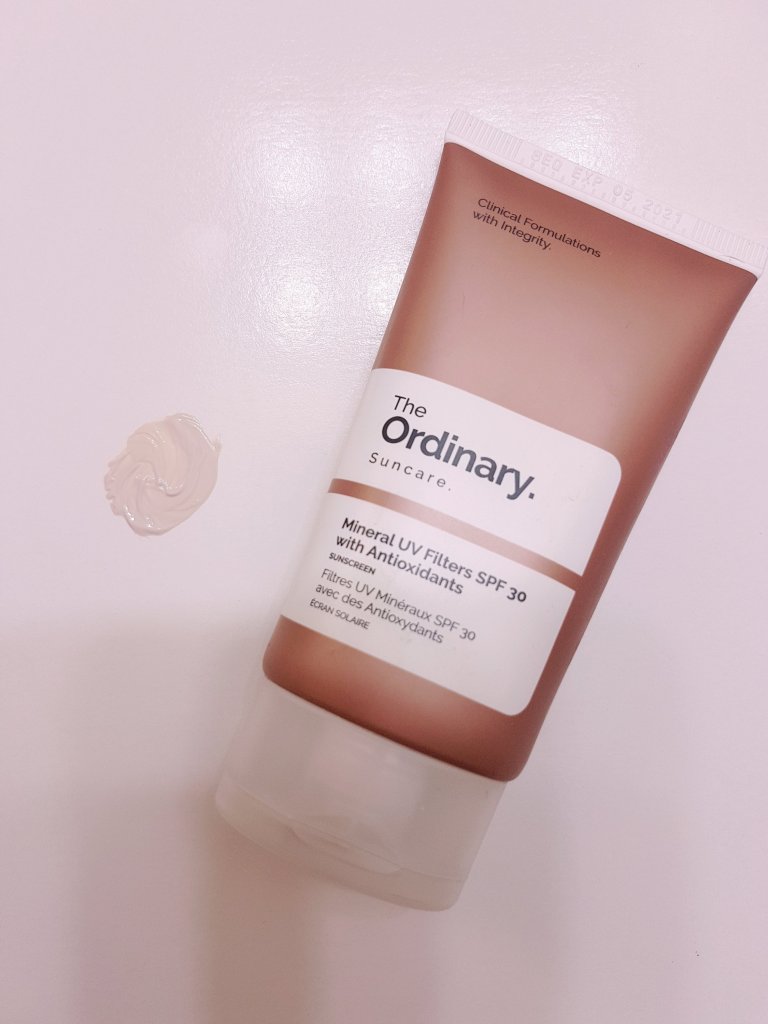
The Ordinary Suncare Mineral UV Filters SPF 30 With Antioxidants Review

The Ordinary Suncare SPF 30 claims to offer lightweight mineral SPF protection (micronized titanium dioxide (5.44%) and zinc oxide (14.03%)) with antioxidants, anti-irritation and hydration in a noncomedogenic silicone base. To note, this is not labelled as having broad spectrum UV protection (protecting from UVA and UVB rays), as Deciem apparently did not test for it, but there is a high percentage of zinc oxide, so one can presume that it protects from UVA waves.

Ingredients: Aqua (Water), Cyclopentasiloxane, Zinc Oxide, Titanium Dioxide, PEG-10 Dimethicone, Glycerin, Helianthus Annuus Seed Oil, PEG-9 Polydimethylsiloxyethyl Dimethicone, Hexyl Laurate, Polyglyceryl-4 Isostearate, Caprylic/Capric Triglyceride, Dimethicone/PEG-10/15 Crosspolymer, Astaxanthin, Disodium Uridine Phosphate, Ethyl Ferulate, Rosmarinus Officinalis Leaf Extract, Tasmannia Lanceolata Fruit/Leaf Extract, Haematococcus Pluvialis Extract, Picea Mariana Bark Extract, Arginine, Aspartic Acid, Glycine, Alanine, Serine, Valine, Isoleucine, Proline, Threonine, Histidine, Phenylalanine, Sodium PCA, PCA, Sodium Lactate, Glucose, Maltose, Fructose, Trehalose, Urea, Allantoin, Sodium Hyaluronate, Linoleic Acid, Oleic Acid, Phytosteryl Canola Glycerides, Palmitic Acid, Stearic Acid, Isochrysis Galbana Extract, Lysolecithin, Lecithin, Triolein, Pentylene Glycol, Dipropylene Glycol, Polyglyceryl-10 Oleate, Polyglyceryl-5 Trioleate, Polyglyceryl-10 Stearate, Tocopherol, Alumina, Citric Acid, Trisodium Ethylenediamine Disuccinate, Sodium Chloride, Sodium Hydroxide, Phenoxyethanol, Chlorphenesin. 

The antioxidants in the formula neutralize free radicals, protect from UV exposure and minimize the intensity of UV radiation penetrating the skin. The biosugar complex increases the skin’s ability to hold water and provide short and long term hydration. The lipids restore a compromised skin barrier and prevent water loss. Tasmanian pepperberry calms skin.

Directions state to apply liberally 20 minutes before sun exposure, reapply every 2 hours when in continued sun exposure and after water and sweat exposure. This sunscreen is not water resistant.

I have medium toned, oily skin in warmer weather that is prone to breakouts and blackheads and I easily get hyperpigmentation (freckles) from the sun.

I generally do not like lotion sunscreens, as they feel heavy (especially mineral sunscreens) and had been using Colorescience Sunforgettable Mineral Powder. I recently saw a photo of different sunscreen types under UV light showing that sunscreen powder applies rather patchy and it is hard to build up, so decided to try lotion sunscreen again. I still like to use mineral powder sunscreen for touch-ups throughout the day over makeup.

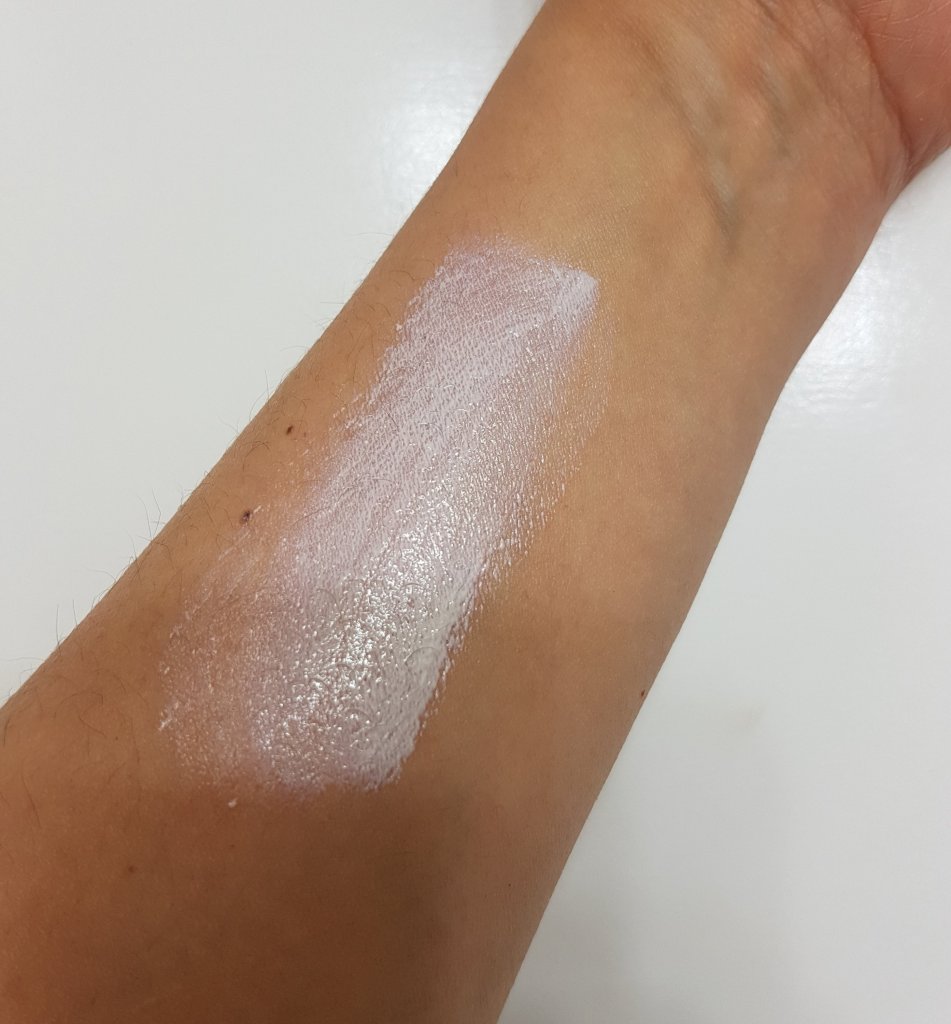
The Ordinary Mineral UV Filters is a beige-colored, thick lotion that has an almost mild nutty scent I thought.

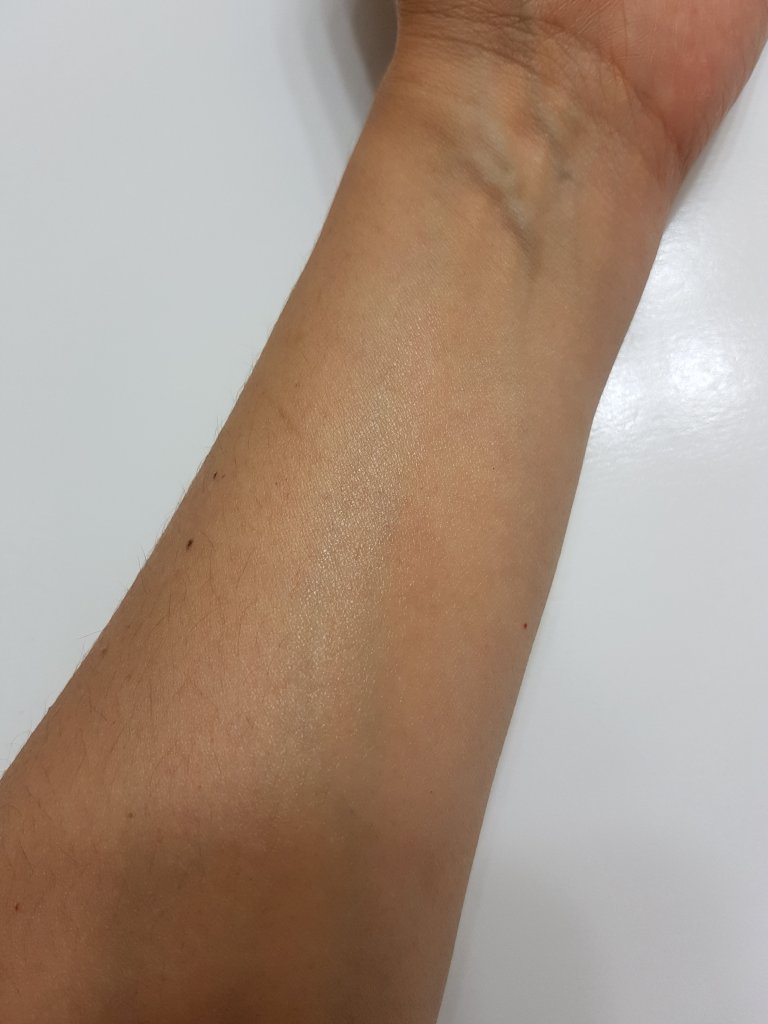
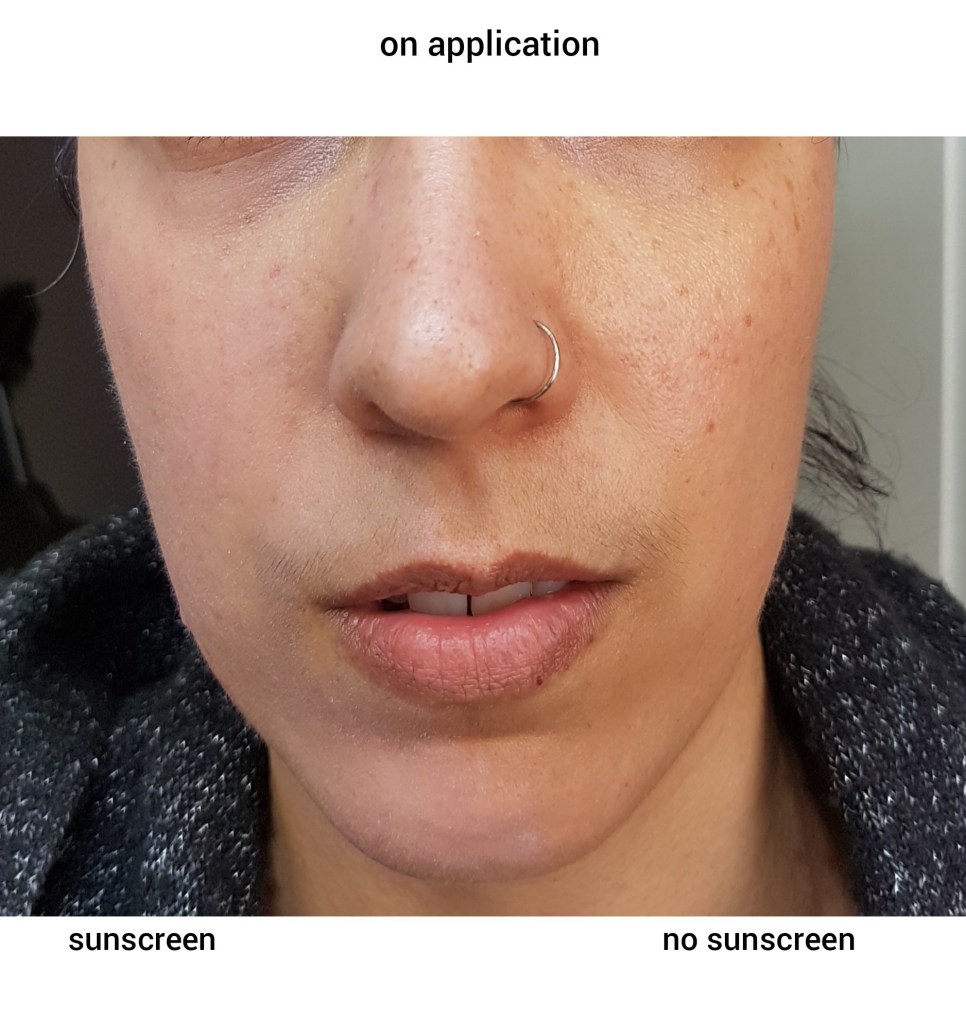
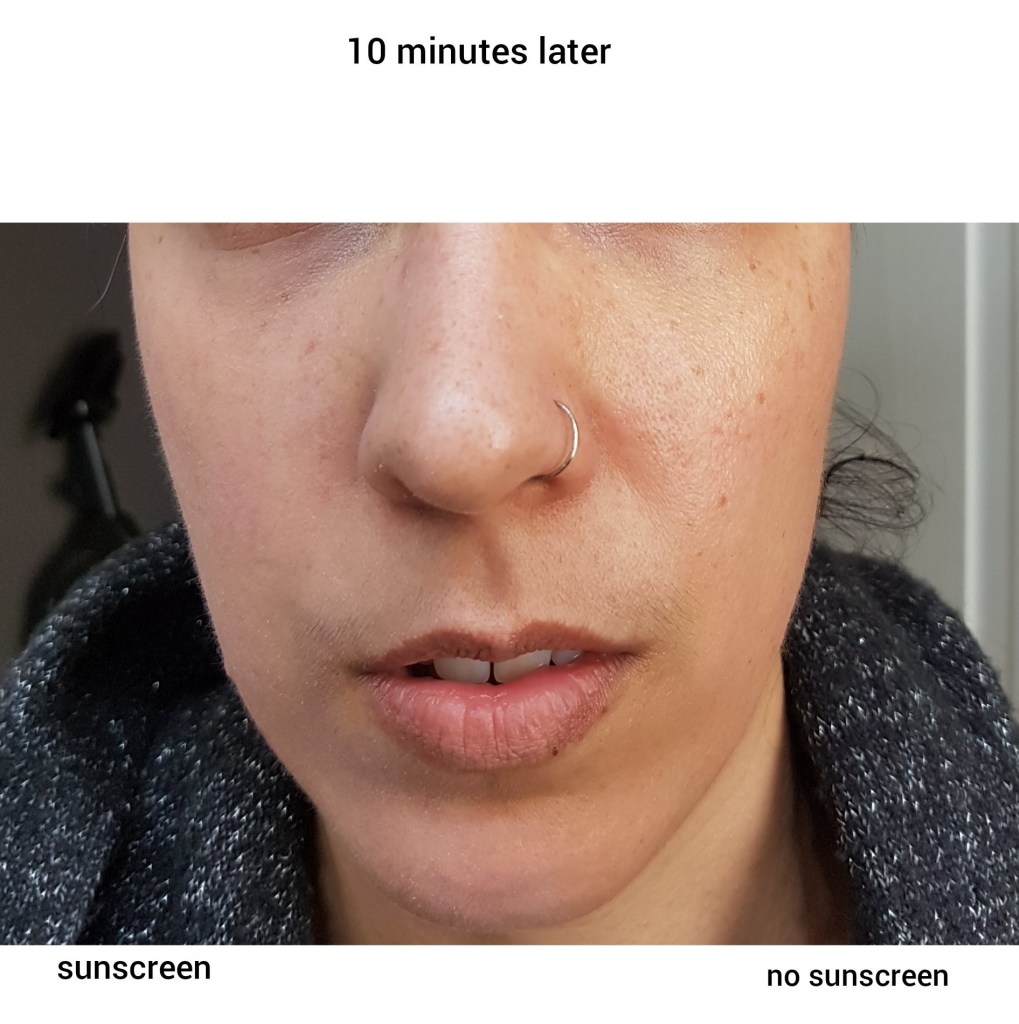
Using the general application “rule” of 1/4 teaspoon for the face, I used half that and applied to half my face in the above photos. It is a bit hard to tell with the lighting and angle of the photos, but my skin is noticeably lighter/whiter on the right side. Since the sunscreen is quite heavy, application is not as smooth as I would hope. I’m using Retin A at this time, so there is some flaking and dry patches that the sunscreen seems to “stick” to and application is less smooth in these areas (might be similar for those with quite dry skin). The freckles and uneven color are covered a little and the pores are blurred. After 10 minutes, the sunscreen dries down a bit, but still has some white cast and tackiness that lasts until it is washed off. My cheeks are generally reddish and after application of the sunscreen my daughter asked why my skin was pink. This sunscreen does not sting my eyes. Application is nicer and white cast is a bit less when the sunscreen is applied after a moisturizer (I like Drunk Elephant Protini). Applying sunscreen over half the face, I am able to clearly tell that it feels heavy on the skin.

Above, you can see around my eye where I missed application that shows the color difference.

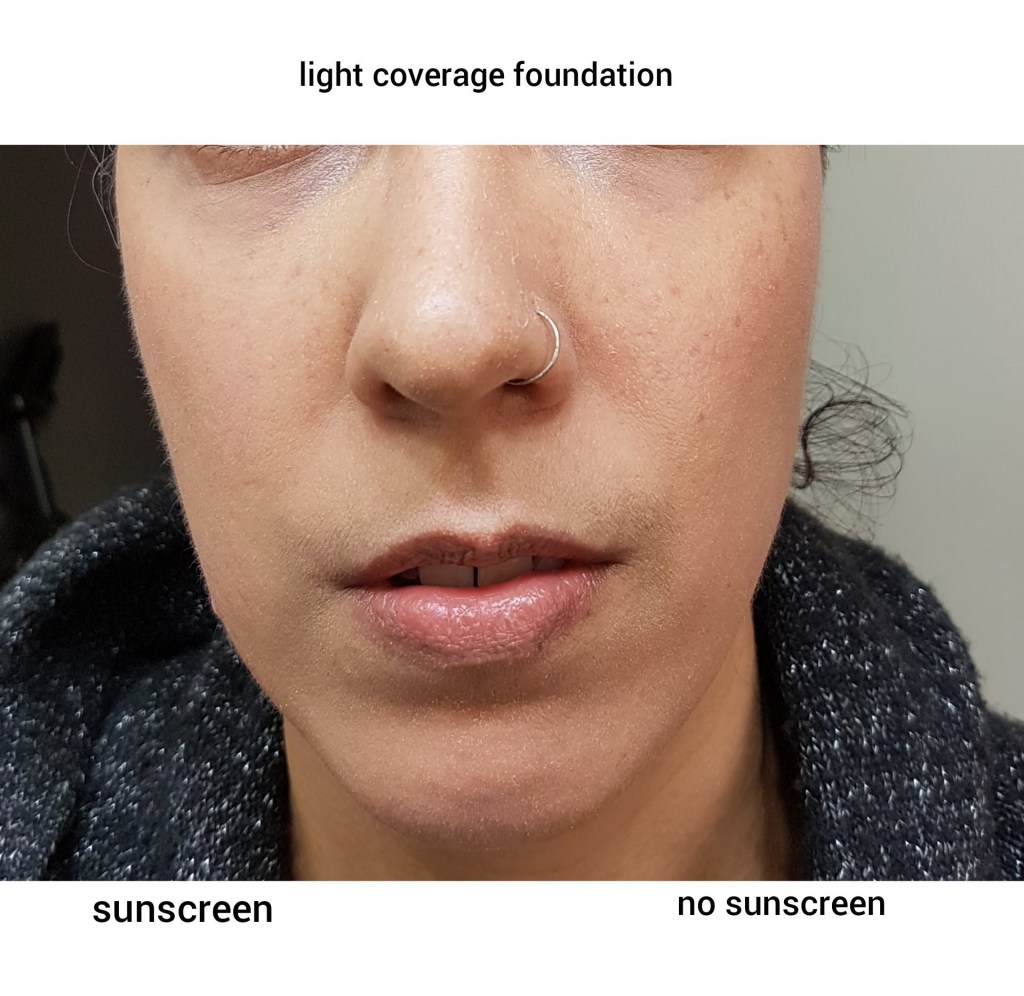
Above shows a satin finish, light coverage foundation with and without the sunscreen. Not a great makeup day, as I am using Retin-A, but in any case, this foundation applies quite nicely over the sunscreen, it covers the white cast, my skin looks smoother and the pores more blurred on the right side. I also notice throughout the day that my face appears less oily and shiny on the sunscreen side, so similar to a silicone-based primer.

This sunscreen can be a bit hard to wash off (even from my hands after application with a mild hand soap), but I did get a good result with The Ordinary Squalane Cleanser.

I’ve been using The Ordinary Suncare for a couple months now and haven’t gotten any unusual breakouts and my skin doesn’t feel dry with use (I don’t think it feels more hydrated either). I noticed a couple more freckles, which could be because I don’t always apply first thing in the morning when walking the dog or when staying inside.

Before purchasing the Ordinary Suncare, I had been using NIOD’s Survival 30 which I liked much more in terms of application, feeling on the skin and white cast.

I would repurchase The Ordinary Suncare despite a bit of white cast (it doesn’t bother me too much and mineral sunscreens are generally going to have some level of white cast) and heavy feeling; though perhaps when working with clients, would wear makeup over it.

Thank you for reading.

Your Best Face Skincare Balance Review (reformulated)

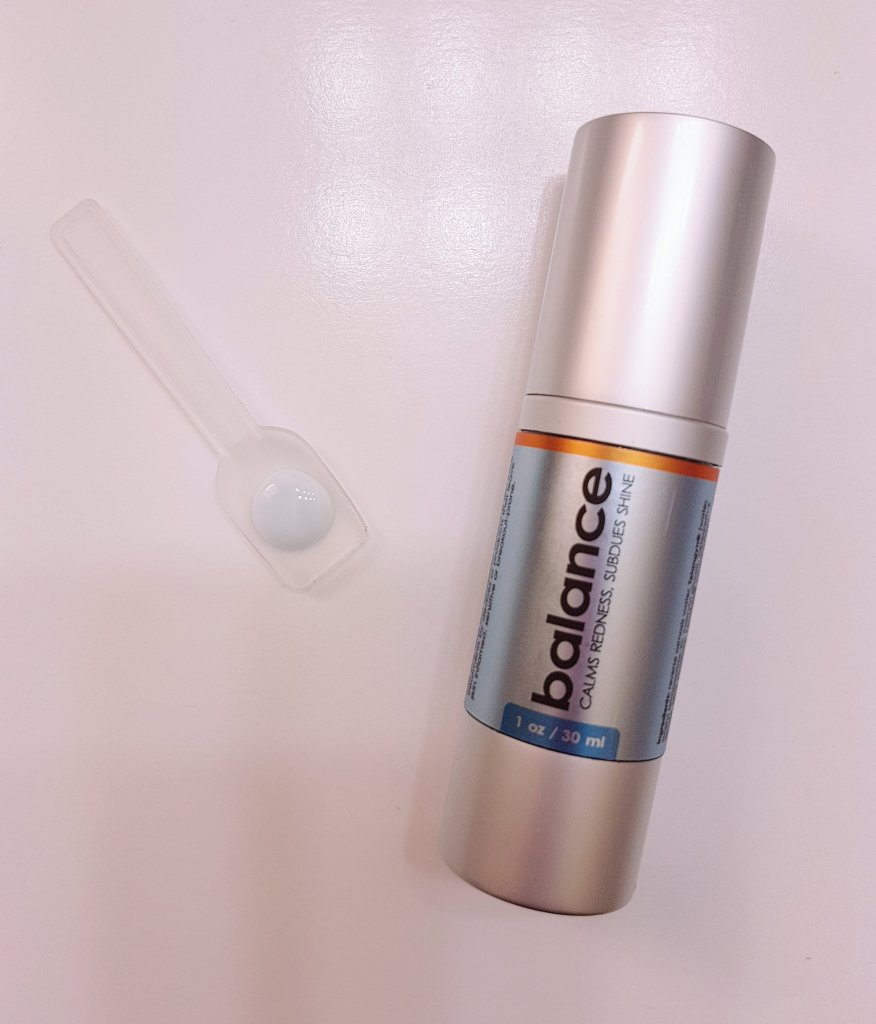
I first used Balance by Your Best Face Skincare a few years ago when it was formulated as a product to absorb oil. Balance was reformulated to calm skin and combat redness. I had emailed the company to clarify if it still had the oil absorbing properties to which they responded that the nylon-12 ingredient, which absorbs oil, was discontinued, but other ingredients were added to retain and improve the oil absorbing and balancing capability (licorice extract, aspen bark extract, L-carnosine, niacinimide).

Ingredients: reverse osmosis water, Telangyn® (water, acetyl tetrapeptide-40, caprylyl glycol), ceteareth-6 olivate, olive squalane, Leucidal® (leuconostoc/radish root ferment filtrate), aspen bark extract, glycyrrhetinic acid (licorice extract), L-carnosine, niacinamide (vitamin B3), sorbitan olivate, hydroxyethylcellulose, ethylhexyl olivate, tetradecylthioacetic acid (TTA), dl-panthenol (vitamin B5), triethyl citrate, alpha bisabolol, lavender essential oil (lavendula angustifolia, Kashmir India), cedarwood essential oil (cedrus atlantica, Morocco), niaouli essential oil (melaleuca quinquinervia viridiflora, Madagascar), azulene (guaiazulene)

Telangyn is a peptide that claims to reduce redness caused by an exaggerated inflammatory response. Niacinamide can help reduce the appearance of blemishes, congestion, enlarged pores and uneven skin tone.

This product is a day cream for combination and oily skin that claims to
combat redness and irritation, similar in function to NIOD’s Modulating Glucosides. Balance also claims to encourage clearer pores, improve smoothness of skin for better makeup application, brighten skin, mattify skin, reduce appearance of new damage and soften fine lines.

Directions state to apply anytime but particularly after treatments that leave the skin irritated, sensitive or breakout-prone.

Comparing the updated Balance to the previous formula, the lavender scent is quite strong, its consistency is thinner and spreadability is better.

While I purchased this for the oil absorbing and mattifying capability, I also used while on retinol and Retin-A to see if Balance mitigated any irritation. I have oily, breakout-prone skin, large pores and redness.

I’ve used Balance for about 5 months in the morning. It does absorb oil, but not as much as the previous version. On the YBF Skincare website, they now sell Matte Face Serum to reduce oiliness and shine. I haven’t tried this product yet, but if looking for oil reduction and matte skin, this would probably be the product to use rather than Balance.

Upon application, Balance gives a bit of a cooling effect to the skin for a couple seconds. This isn’t a moisturizer and doesn’t feel like one, so doesn’t really seem to absorb fully, but provides a sort of smoothing layer over the skin. It certainly doesn’t feel heavy and while it’s not felt on the skin, it is felt to touch.

While using Balance the small breakouts around my jawline were reduced. I still got the odd, larger pimple, but it seemed to heal a bit faster. This product did smooth the skin and makeup went over it quite nicely (application was even nicer when Balance is mixed with an ascorbic acid powder – I use the vitamin C from The Ordinary). I didn’t notice reduction in fine lines or increased brightness.

The redness in my cheeks was a bit reduced (though not as much as I had hoped). When using retinol and Retin-A, Balance seemed to reduce and soothe the irritation. When using retinol and Retin-A I find that cleansing and using products cause stinging and irritation, which settles after a minute – so how much Balance soothed this irritation as opposed to the normal reduction in irritation after the skin gets used to product application, I’m not certain. I’ll also note that a new issue with my skin is inflammation, redness and white, raised bumps when tweezing and waxing my eyebrows. This product provided relief to the swelling and soreness when applied to those areas around my eyebrows. Balance reduced the redness caused by my glycolic acid toner and some, but not all of the irritation.

I had stopped using Balance for about 3 weeks (changing nothing else in my routine) and without use, I got more and bigger breakouts along my jawline and larger pores and oiliness on my forehead.

While Balance didn’t reduce fine lines or increase brightness, it absorbed a bit of oiliness (though didn’t mattify the skin much), reduced inflammation and overall reduced congestion and enlarged pores. I might consider repurchasing particularly if getting something like a chemical peel, microdermabrasion or other similar procedure that causes an exaggerated inflammatory response.

Thank you for reading.

Drunk Elephant Beste No. 9 Jelly Cleanser

I got the Drunk Elephant Beste No. 9 Jelly Cleanser as part of this year’s Sephora birthday gift.

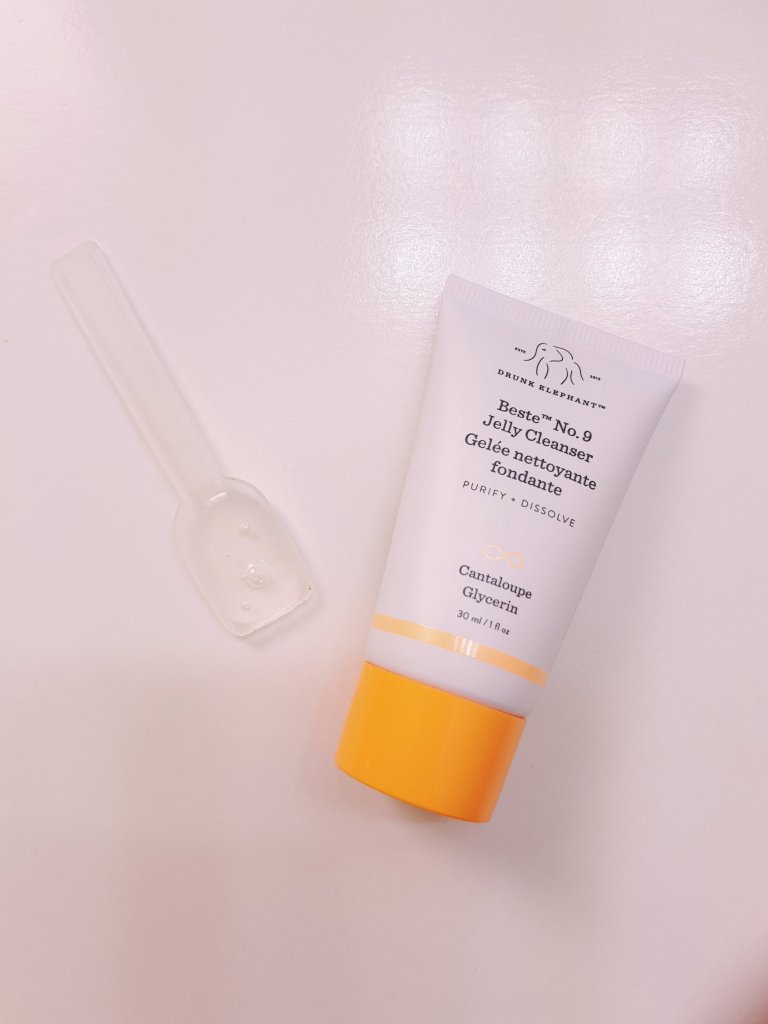
This is a gel foaming cleanser for all skin types that claims to remove all traces of makeup, sunscreen, excess oil and debris while supporting a healthy skin barrier.

Directions state to massage over skin, add water to lather and rinse. Drunk Elephant says to use this nightly, as they do not recommend cleansing in the morning.

With the warmer weather, my skin is oily, more so on the T zone.

Ingredients: Water/Aqua/Eau, Glycerin, Cocamidopropyl Betaine, Coco-Glucoside, Sodium Lauroyl Methyl Isethionate, Cocamidopropyl Hydroxysultaine, Sodium Methyl Oleoyl Taurate, Propanediol, Aloe Barbadensis Leaf Extract, Glycolipids, Linoleic Acid, Lauryl Glucoside, Cucumis Melo Cantalupensis Fruit Extract, Sclerocarya Birrea Seed Oil, Dipotassium Glycyrrhizate, Tocopherol, Citric Acid, Phenoxyethanol, Sodium Hydroxide, Sodium Benzoate, Sodium Chloride, Polylysine

Key ingredients – Coconut-based surfactants and cleansers create a “rich” foam to dissolve makeup and oils. Marula oil helps remove makeup. Glycerin keeps skin hydrated. Cantaloupe extract contains antioxidants and helps sooth and hydrate the skin.

I’ve used this cleanser for about a month. It doesn’t have much of a scent, especially on adding water. The gel forms into a slight foam (I wouldn’t say a rich foam like that of Amarte’s Daily Wonder Cleansing Foam) on adding water. From the first use, I was surprised by how and dry and tight my skin felt on rinsing and patting dry. The texture of the cleanser is nice and it seems to rinse well (provided extra time/more water is used than has been my experience with other cleansers; otherwise there is a bit of a sticky feeling on the skin). When using in the evening, I would often notice larger breakouts on my jawline/lower cheek in the morning. I stopped use for a few days and upon resuming, got the breakouts again, so could assume this cleanser is the culprit.

It removed my light/medium coverage foundation and sunscreen quite well (I used The Ordinary sun care). For eye makeup I wore NudeStix Nude Metallics for Eyes and a non-waterproof mascara from Tarte. The Beste Cleanser left makeup smudges around my eyes.

While the Drunk Elephant Beste No. 9 Jelly Cleanser removes face makeup and sunscreen, eye makeup is left behind and it leaves the skin feeling dry and tight with (perhaps) breakouts on use. I would not purchase the Beste Cleanser.

Thank you for reading.